
State-owned fuel retailers are losing close to Rs 3 per litre on selling diesel while the profit on petrol has trimmed due to recent firming up in international oil prices, industry officials said detailing reasons for continuing to hold retail prices. Indian Oil Corporation (IOC), Bharat Petroleum Corporation Ltd (BPCL) and Hindustan Petroleum Corporation Ltd (HPCL), who control roughly 90 per cent of India's fuel market, 'voluntarily' have not changed petrol, diesel and cooking gas (LPG) prices for almost two years now, resulting in losses when input cost was higher and profits when raw material prices were lower.

The excise duty on unbranded petrol was increased from Rs 5.46 per litre to Rs 7.06 a litre.
The RBI's surprise rate hike may have been prompted by its inability to convince the government to cut excise duty on petrol and diesel and take other supply-side measures to tame runaway inflation, sources aware of the central bank's thinking said on Thursday. There has been a record Rs 10 a litre increase in petrol and diesel prices in a matter of 16 days beginning March 22, which has further fuelled the already high commodity prices. The RBI, which is mandated to ensure inflation is under 6 per cent, acted with a 0.40 per cent increase in repo rate to check prices before they went completely out of hand.

Here is a list of items set to become cheaper and costlier.
The ongoing Hamas-Israel conflict has disrupted India's efforts to gain from a recent fall in crude oil prices. Since Hamas' invasion of southern Israel on October 7, petroleum has become costlier by around $5 per barrel, threatening to stoke prices and impact growth. Brent crude was trading at $89.8 per barrel on October 9 (9.15 pm IST), up over 4 per cent, thwarting India's anticipation of a period of declining oil prices - after the leading global petroleum benchmark declined by around 11 per cent last week.
It is the seventh reduction in jet fuel rates since August

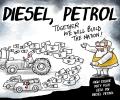
Dominic Xavier offers his take on the latest blow to personal finances.

It is time he stood up and assured the middle class that they can count on him as one of their own, says Dr Sudhir Bisht.

Auto major Mahindra & Mahindra on Friday said it will hike the prices of its passenger cars and commercial vehicles by Rs 6,000 to Rs 20,000 from October 1, partly to offset higher input costs and depreciation of rupee against the dollar.
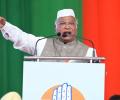
Congress president Mallikarjun Kharge has accused the BJP of rigging the Maharashtra assembly elections and called for a return to ballot paper voting. He also criticized the Modi government for selling off public assets, undermining democratic institutions, and promoting communal polarization. Kharge's remarks come as the Congress prepares for its AICC session in Ahmedabad, where it will present its political and economic views.

India's fuel sales surged past pre-pandemic levels in March on twin impact of the economy rebounding from the lifting of pandemic-related restrictions and anticipation of price increases leading to stocking. In the first two weeks of March, dealers, as well as the public, topped up their tanks in anticipation of an increase in prices that had been on hold in the run-up to the elections in states like Uttar Pradesh. While daily price revisions restarted on March 22, the increases were calibrated.

State-owned Indian Oil, Bharat Petroleum and Hindustan Petroleum currently lose Rs 180 crore per day.
Petrol prices have been cut in small doses on 20 occasions.

Pilot's statement came amid reports of his discontentment with the Congress leadership.
The government on Wednesday hiked the prices of petrol, diesel and LPG by Rs 5, Rs 3 and Rs 50 respectively.

The government has raised the windfall profit tax levied on domestically produced crude oil as well as on the export of diesel and ATF, in line with firming international oil prices, according to an official order. The levy on crude oil produced by companies such as Oil and Natural Gas Corporation (ONGC) has been increased to Rs 2,100 per tonne from Rs 1,700 per tonne, the order dated January 2, said. Crude oil pumped out of the ground and from below the seabed is refined and converted into fuel like petrol, diesel and aviation turbine fuel (ATF).
The Union government on Thursday ruled out any increase in the prices of petrol and diesel despite the surge in global crude prices.
Hindustan Motors on Wednesday announced a marginal 0.5 per cent increase in Ambassador prices and 0.3-0.5 per cent on all Trekker variants following the announcement of a two per cent education cess in the Union Budget.
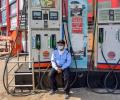
Hitting out at Prime Minister Narendra Modi over the issue of tax cuts on petroleum products, Tamil Nadu Chief Minister M K Stalin on Thursday said people were aware of the fact behind the issue and pointed out at his government effecting a Rs 3 a litre cut on petrol earlier.

Since end-May there has been volatility in the foreign exchange market.

The price of petrol is expected to come down to Rs 84.71 a litre and diesel to Rs 77.98

State-owned fuel retailers, who control 95 per cent of the petrol pump sales, sell diesel at government-fixed rates, which are way lower than the cost of production.

After a spike, losses on sale of diesel have fallen by nearly a rupee to Rs 2.49 per litre as international oil rates have moderated.
The Bharatiya Janata Party on Tuesday hit out at the government for the recent hike in petrol prices and alleged that this increase is a result of the UPA regime's wrong economic policies and not an outcome of any current global situation.
Petrol and diesel sales in the country fell in July over the previous month as the onset of monsoon chipped away demand in some sectors and restricted mobility, preliminary industry data showed. Diesel, the most widely used fuel in the country, saw consumption drop 13.1 per cent to 6.44 million tonnes from 7.39 million tonnes of demand in June. The arrival and intensity of monsoon weigh heavily on diesel demand in the country and consumption traditionally is lower in July-September than in April-June.

In the first reduction in rate in two months, jet fuel or ATF price on Thursday was cut by 3 per cent in line with softening international crude oil prices. Aviation turbine fuel (ATF) price was reduced by Rs 1,887 per kilolitre, or 3 per cent, to Rs 58,374.16 per kl in the national capital, according to a price notification of state-owned fuel retailers. This is the first reduction in rates after four rounds of increase since February. Rates were increased by Rs 3,246.75 per kl on February 1, followed by a 3.6 per cent hike on February 16, and a steep 6.5 per cent raise on March 1. On March 16, prices were again raised by Rs 860.25 per kl. On Thursday, a Rs 10 per cylinder reduction in price of domestic cooking gas LPG also came into effect.
The Finance Ministry on Thursday expressed hope that domestic diesel prices will soon become market linked in the backdrop of softening global crude oil rates.
Petrol, that had in April/May witnessed 11-12 per cent growth in consumption, in fact saw a six per cent fall in demand at 8,02,500 tons in June, oil ministry officials said.

The excise duty cuts on diesel and petrol will cost Rs 45,000 crore and lead to a 0.3 percentage point widening on the Centre's fiscal deficit, a foreign brokerage said on Thursday. Going by the overall consumption, the costs of the surprise move - which came after months of concerns over high payouts at filling stations - for the entire fiscal will come at Rs 1 lakh crore or 0.45 per cent of GDP, economists at Japanese brokerage Nomura said in a report. For the remaining months of the ongoing FY22, the cost will come at Rs 45,000 crore, which leads to an upward review of the fiscal deficit target.
Reliance Industries Ltd on Thursday reported a 7.4 per cent rise in its December quarter net profit, as its retail business rebounded and telecom earnings rose. Its consolidated net profit of Rs 18,540 crore, or Rs 13.70 per share, in October-December - the third quarter of April 2024 to March 2025 fiscal (FY25) - compared to Rs 17,265 crore, or Rs 12.76 a share, in the same period a year back, according to a stock exchange filing by the company.

Maharashtra Congress chief Nana Patole on Thursday said if actors Amitabh Bachchan and Akshay Kumar do not take a stand on the issue of fuel price hike, then screening of their films and shootings would not be allowed in the state.
A Rs 3-4 a litre hike in the price of petrol, which had been freed from government control last June, is also on the cards immediately after polling in the last phase of Assembly elections is completed on May 10.
Passenger and commercial vehicle prices are expected to rise as automobile companies invest in upgrading vehicles to meet stricter emission norms that kick in from April next year. The Indian automobile industry is currently working to make their products meet the second phase of Bharat Stage VI, equivalent to Euro-VI emission norms, in real time driving conditions. Four-wheeler passenger and commercial vehicles will need more sophisticated equipment to be added to meet the next level of emission standards.
The Planning Commission on Tuesday made a case for increasing prices of petrol and diesel arguing that it was not a good idea to check inflation by keeping prices of petroleum products low.
The finance ministry has rejected a cut in duties to avoid an increase in petro prices even as Petroleum Minister Mani Shankar Aiyar will begin a consensus-building exercise within the UPA for a fuel price hike.

The revised prices enhances the accessibility of these outstanding products, which offer segment-first safety features and class-leading technologies
